 Catstellation
Key points
- Losing a cat is real grief: sadness, guilt, anger or even relief are all normal reactions.
- There is no normal timeline. The pain often softens over weeks or months, with waves on certain dates.
- What helps: talking about them, keeping something, creating a small ritual, looking after yourself, and not rushing to adopt.
- A cat left behind can grieve too: keep their routine and see a vet if they barely eat.
Pet loss grief is real grief
Crying for your cat is not an overreaction. You are losing a daily companion, a quiet presence, a set of rituals: the morning bowl, the evening purr, the weight on the duvet. It is common to look for them, to hear a sound and think it is them, to keep their bowl out for a few days. These reactions are simply what attachment looks like.
Yet pet loss is often poorly recognised. Some people don’t dare mention it at work, or hear “it was just a cat”. That gap can make the pain heavier. Your grief is the size of the bond you shared: it does not need to be justified.
The stages of grief after losing a cat
People often talk about “stages of grief”. They don’t follow a set order, and you can move between them in a single day. Knowing them mostly helps you tell yourself: “what I feel is normal”.
| What you feel | What it looks like | What can help |
|---|---|---|
| Shock | It doesn’t feel real, you go on autopilot, you still look for them. | Make no big decisions, give yourself time. |
| Sadness | Tears, tiredness, missing them, an empty house. | Talk, look at photos, cry without judging yourself. |
| Guilt | “I should have noticed sooner”, “Did I decide too fast?” | Talk to your vet, remember you acted out of love. |
| Anger | At the illness, an accident, yourself, sometimes others. | Say it to someone you trust, write it down. |
| Peace | Memories bring a smile before they bring pain. | Keep a place for them: a ritual, a tribute, a star. |
How long does grief for a cat last?
There is no normal timeline. For some people the pain softens within weeks. For others it comes back in waves for months, often at specific moments:
- their birthday or the day they came home;
- the first time you come home and no one greets you;
- a found object: a toy under the sofa, fur on a sweater;
- the seasons: the first summer without them on the balcony.
What matters is not moving on quickly, but letting sorrow slowly make room for tender memories. If, after several months, sadness still keeps you from sleeping, eating or functioning, support can help.
How to cope with losing a cat: 8 things that help
- Talk about it with someone who knew your cat, or who has lost a pet too. Saying their name out loud helps.
- Give yourself permission to be sad, even if others don’t understand. Take a day off if you can.
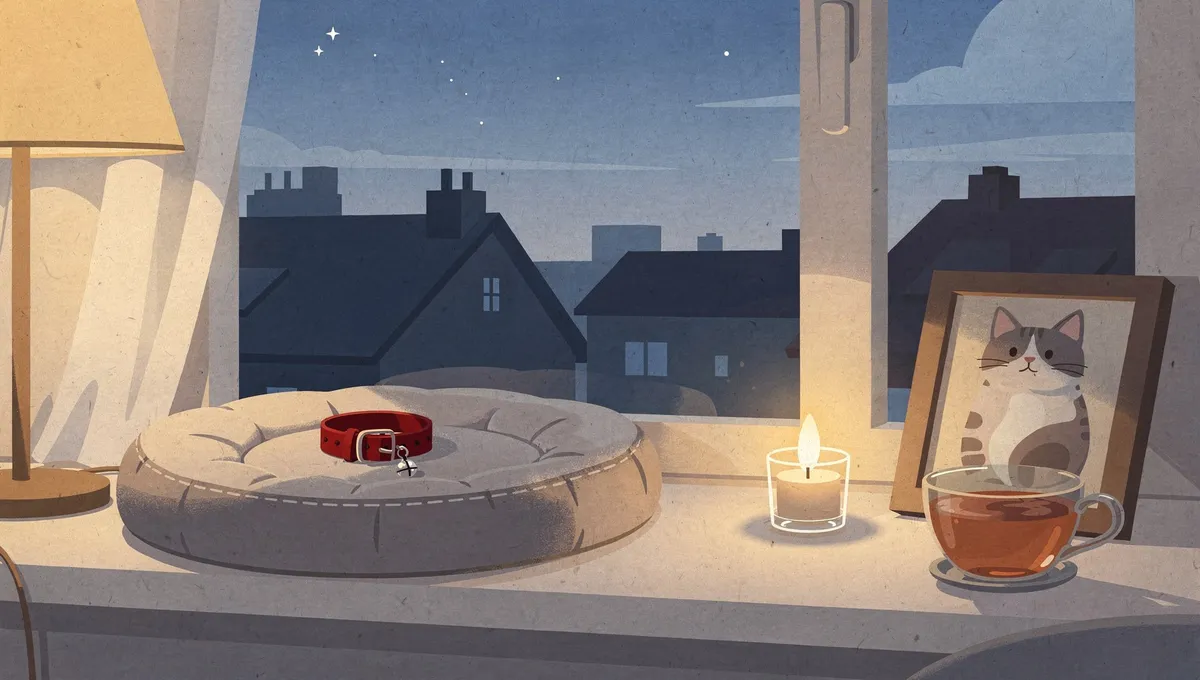
- Keep something: a few printed photos, their collar, a tuft of fur, a paw print.
- Write: a letter to your cat, the memories you never want to forget, what you wish you had said.
- Create a small ritual: a candle at night, a plant where they used to sleep, a moment on their date.
- Tidy up at your own pace. There is no rule that says the bowl or bed must go right away.
- Look after yourself: sleep, eat, walk outside. Grief tires the body as much as the heart.
- Give them a place somewhere: an album, a corner of the garden, or a star in the Catstellation sky.
The guilt so many people feel
“I should have noticed sooner.” “I wasn’t there.” “Did I decide too early, or too late?” Guilt is one of the most common feelings after a cat dies, especially after euthanasia or an accident.
Cats are experts at hiding pain: vets themselves point out that signs are often subtle until the very end. If you chose euthanasia, that decision was made to spare them suffering. It is one of the hardest acts of love there is. Talking your doubts through with your vet can bring a lot of relief.
Talking to children about a cat’s death
Simple, honest words work better than “they went away” or “they went to sleep”, which can create waiting or a fear of falling asleep. By age:
- Under 6: “Milo died. His body stopped working, he doesn’t hurt anymore, and he won’t come back. It’s okay to feel sad.”
- 6 to 10: explain the illness or accident in concrete words and answer questions, even repeated ones.
- Teens: let them take part, say goodbye and choose a tribute.
Drawing the cat, choosing a photo, planting a flower or writing them a note helps young children a lot. Creating their cat together in Catstellation and watching them climb to the stars can also be a gentle moment to share.
Do cats grieve another cat?
Cats do notice when a companion is missing. In a 2024 study published in Applied Animal Behaviour Science, based on 412 owners, the changes most often reported in the surviving cat were: eating less, playing less and seeking more attention from their humans. These changes were stronger when the two animals had been close.
- Keep the usual routine: meals, play, cuddle times.
- Offer more presence and short play sessions, without forcing.
- Let them explore the places where the other cat slept.
- Avoid bringing in a new cat too quickly: let the home settle first.
A cat that barely eats for more than a day or two should see a vet: in cats, prolonged fasting can become dangerous for the liver.
Should you get another cat?
There is no right timing. Some people need a presence quickly, others need months or years. The right time is when you want to welcome this new cat for who they are, not to replace the one you lost. A new companion doesn’t take their place: they make a new one, alongside.
When to ask for help
If sadness keeps you from sleeping, eating or working for a long time, or if you feel very isolated, talk to someone close, your doctor or a professional. Your vet can also point you to pet loss support groups and hotlines.
Frequently asked questions
How do I cope with losing my cat?
Allow yourself to be sad, talk about them, keep something (photos, collar, paw print), create a small ritual and look after yourself. There is no right way and no deadline.
How long does grief for a cat last?
There is no normal timeline. The pain can soften within weeks or come back in waves for months. What matters is that it slowly makes room for memories.
Is it normal to be this sad about a cat?
Yes. A cat is a daily companion for many years. Pet loss grief is real grief, even if those around you don’t always recognise it.
Is it normal to feel guilty after euthanising my cat?
Yes, it is very common. The decision was made to spare them suffering, and it is one of the hardest acts of love.
Do cats grieve when another cat dies?
Many do. Owners most often notice their cat eating less, playing less and seeking more attention. Keep their routine, and see a vet if they barely eat for more than a day or two.
How do I explain a cat’s death to a child?
With simple, honest words: the cat died, their body stopped working, they don’t hurt and won’t come back. Avoid “went to sleep” or “went away”.
Updated