 Catstellation
Key points
- The most common signs: eating and drinking less, sleeping a lot, hiding, no longer grooming, and weight loss.
- Some signs are emergencies: laboured or open-mouth breathing, collapse, no response.
- Several of these signs can come from a treatable illness: see your vet before assuming it is the end.
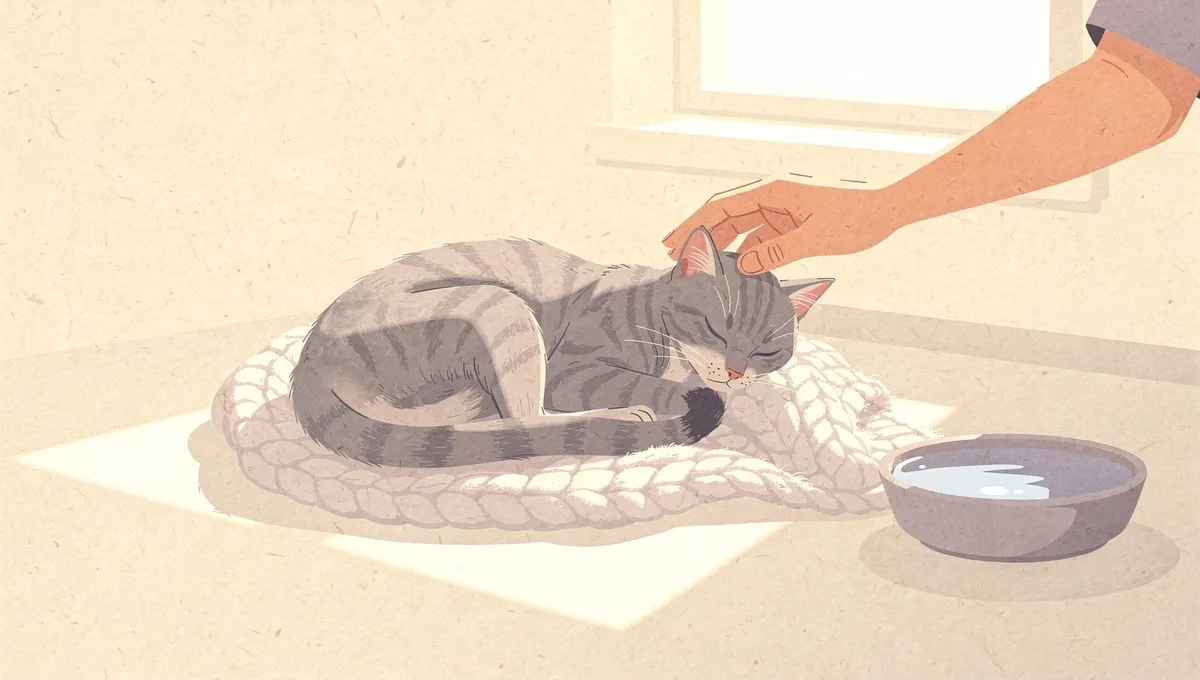
- At the end of life, comfort comes first: warmth, calm, water within reach, an easy litter box, your presence.
Signs your cat is dying
On their own, these signs don’t necessarily mean your cat is dying. It is when they add up, and get worse, that you should pay attention:
| Sign | What you notice |
|---|---|
| Appetite and thirst | Eating and drinking much less, or refusing favourite foods. |
| Weight loss | Hips and spine feel more prominent under your hand. |
| Sleep | Sleeping almost all day, rarely getting up. |
| Withdrawal | Hiding, seeking quiet cool places, avoiding contact, or never leaving your side. |
| Grooming | A dull, greasy or matted coat: they no longer wash. |
| Mobility | Weak back legs, unsteady walk, no longer jumping onto the couch. |
| Litter box | Struggling to reach it, or having accidents beside it. |
| Breathing | Faster, slower or more effortful than before, even at rest. |
| Smell | Bad breath or an unusual odour that gets worse. |
| Confusion | Seeming lost, crying at night, forgetting their routines. |
When to call the vet urgently
Some signs need an immediate visit, day or night:
- open-mouth, very fast or laboured breathing;
- collapsing, being unable to stand, or not responding;
- not eating or drinking for more than a day;
- repeated vomiting or diarrhoea;
- not urinating, or straining in the litter box with nothing coming out (an emergency, especially in male cats).
Several of these signs can come from a treatable illness (kidney problems, thyroid, infection, dental pain). Always have your cat examined before assuming they are at the end of life.
Signs your cat is dying of old age
In a very old cat with no diagnosed illness, the end often comes gently: they sleep more and more, eat in small amounts, lose weight, seek warmth (a radiator, the sun, your lap) and move less. In the last days they may refuse all food, breathe more slowly and have cold paws. Your vet can help you know whether they are in pain and ease it.
How to assess their quality of life
Vets often use Dr. Alice Villalobos’s “HHHHHMM” scale: you score seven criteria from 0 to 10 (hurt, hunger, hydration, hygiene, happiness, mobility, and more good days than bad). A total above 35 is considered acceptable quality of life. Our guide on when to euthanise a cat walks through it criterion by criterion.
A simple tip: keep a small calendar and mark each day with a green dot (good day) or a red dot (bad day). When red starts to win, it is time to talk to your vet again.
Keeping their last days comfortable
- Warmth: a soft blanket, a cushion near a radiator or in the sun.
- Everything within reach: water, food and a low litter box in the same room, no stairs.
- Tempting food, warm and fragrant, in small amounts, following your vet’s advice.
- Calm: less noise, fewer visitors, slow movements.
- Help with grooming: a warm damp cloth and very gentle brushing.
- Your presence: your voice, scent and touch reassure them.
- For pain: never give human medication (acetaminophen is toxic to cats). Your vet can prescribe suitable pain relief.
Do cats know when they are dying?
We can’t know for sure. What we do see is that a very sick or old cat changes their habits: seeking quiet, hiding, or on the contrary staying glued to their human. These behaviours are mostly linked to fatigue, pain and a need for safety. Staying close, gently, is the best thing we can do.
Preparing for what comes next
When the end is near, it can help to think ahead, calmly: would you like them to pass at home, is euthanasia something to consider, would you prefer burial or cremation? Our guides on euthanasia and what to do afterwards can help you see more clearly.
Frequently asked questions
What are the signs a cat is dying?
The most common are a big drop in appetite and thirst, weight loss, sleeping a lot, hiding, no longer grooming, weak legs and changes in breathing. See your vet: some of these signs are treatable.
How long can a cat go without eating?
A cat should not go without food for more than a day or two: prolonged fasting can cause serious liver disease. See a vet promptly.
Is my dying cat in pain?
Not necessarily, but cats hide pain well. Hiding, no longer grooming or laboured breathing are reasons to see your vet, who can prescribe suitable pain relief.
What are the signs a cat is dying of old age?
Sleeping more and more, eating little, losing weight, seeking warmth and moving less. In the last days they may refuse food, breathe more slowly and have cold paws.
Why is my old cat hiding?
A sick or elderly cat often looks for a quiet, safe place. It is a sign they don’t feel well: have them examined.
This guide offers general guideposts and does not replace your vet’s advice.
Sources
Updated